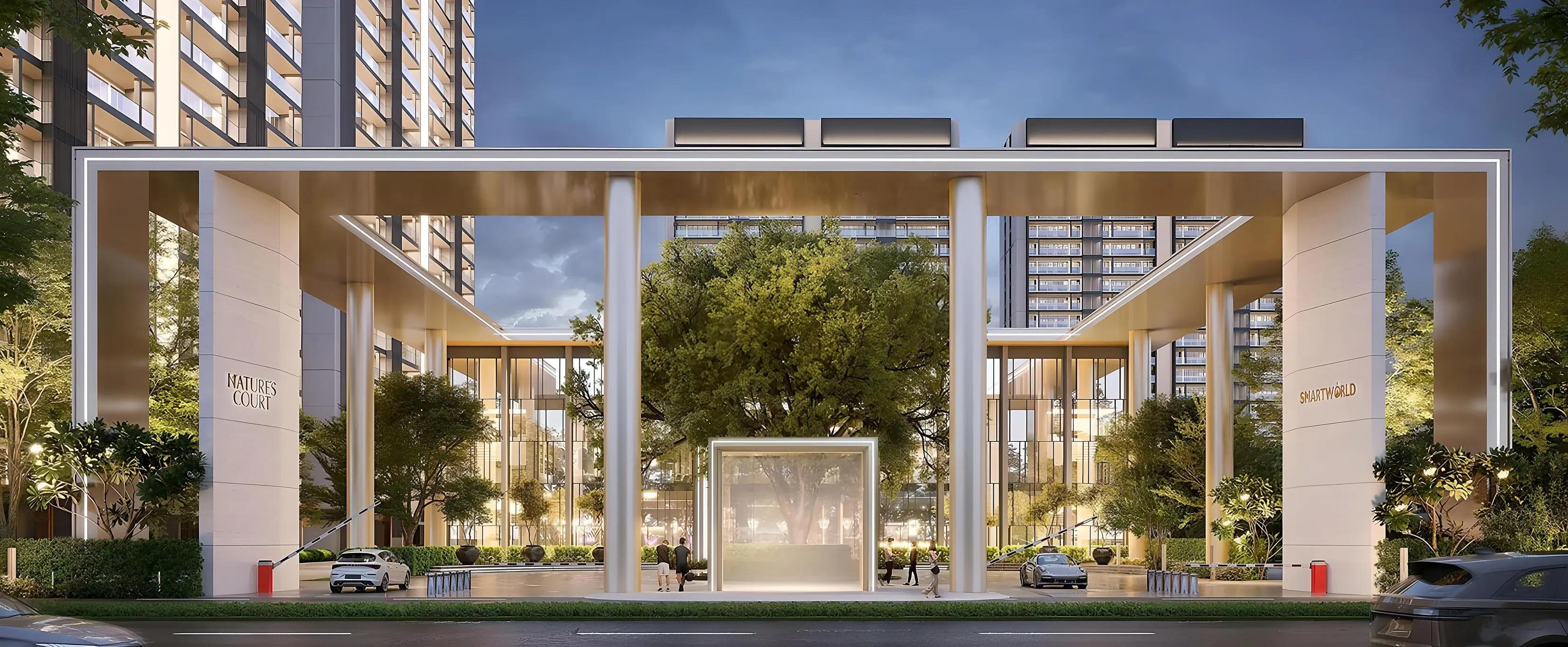
L&T Realty paid close to 56 crore rupees for a single acre in Sector 86. That number, not any marketing claim, is the real starting point for understanding why New Gurgaon has become 2026's luxury hotspot.
Land at that price only gets bought when a developer believes the corridor has already turned a corner. Here's the math behind that belief.
What the Numbers Actually Show
New Gurugram's average quoted base rate stood near 13,300 rupees per square foot on built-up area in early 2026, based on Anarock's tracked listing data, up roughly 4 percent over the previous quarter. The Dwarka Expressway belt sat slightly ahead at close to 14,000 rupees per square foot, moving at a similar pace.
Demand tells a sharper story than price alone. Gurugram absorbed the majority share of NCR's new residential launch supply in the same period, with New Gurugram and the Dwarka Expressway corridor together accounting for close to half of that new supply. JLL's tracked luxury sales data for 2025 showed Gurugram capturing the overwhelming share of NCR's luxury home transactions, with Golf Course Road, the corridor's traditional address, contributing a shrinking portion of new luxury absorption.
The Land Price That Explains Everything
L&T Realty's 1,123 crore rupee acquisition of close to 20 acres across Sectors 81 and 86 works out to nearly 56 crore rupees an acre. Spread across the roughly 3.6 million square feet of planned development, the land component alone comes to close to 3,120 rupees per square foot, before a single wall goes up. This scale is a core part of why the project is already being called the biggest pre-launch of 2026.
That figure matters because it is institutional pricing, not a discount corridor rate. A listed engineering conglomerate does not commit capital at that level to a market it considers speculative. The price paid here reflects a developer's own underwriting of where New Gurugram sits today, not where it might sit someday.
Why Large Parcels Matter More Than Location Alone
The real shift in 2026 is not that buyers suddenly prefer New Gurugram's address. It is that genuine luxury layouts, low density, wide setbacks, a real clubhouse footprint, need acreage that older corridors no longer have.
Golf Course Road is largely built out, with remaining parcels fragmented into smaller plots that force taller, tighter towers to hit the same unit count. New Gurugram still has large contiguous holdings. Emaar's Serenity Hills in Sector 86 spans close to 26 acres with HARERA registration since October 2025. DLF's Privana township across Sectors 76 and 77 runs to 116 acres. L&T's own parcel, at 20 acres, sits comfortably in that same bracket, and the same land ratio directly shapes how the 3 BHK price and spatial design is likely to play out once units are priced.
Comparing the Corridors on Scale and Price
| Corridor | Typical Parcel Size | Rate Band (per sq ft) | What It Offers |
|---|---|---|---|
| Golf Course Road | Under 3 acres | 20,000 to 35,000 | Established address, limited new supply |
| New Gurugram (Sector 81-89) | 20 to 30 acres | 13,000 to 14,000 | Large low-density parcels, growing infrastructure |
| Dwarka Expressway belt | 20+ acres | 14,000 to 20,000+ | Newest supply, strongest recent price growth |
The gap in rate per square foot mostly reflects what a corridor can physically deliver, not a difference in buyer appetite. A smaller, older plot commands scarcity pricing. A larger, newer one delivers space that scarcity pricing cannot buy back.
What Buyers Are Actually Trading Off
End-users moving from a tighter Golf Course Road unit into a New Gurugram project typically trade a shorter commute for meaningfully more space and lower density, a swap that's become easier to justify now that Dwarka Expressway anchors the corridor as a functional route rather than a promised one.
Investors are reading the same land math differently. A corridor where developers are paying institutional land prices for large parcels signals a multi-year commitment, not a speculative flip. That's a different risk profile than betting on a smaller infill plot in an already mature address.
The Gap Buyers Should Still Price In
None of this land math confirms a specific project's final price or delivery date. L&T Sector 86 remains in pre-launch, with no HRERA number and no published price sheet as of this writing. The land price tells you where the developer thinks the market is headed. It does not tell you what a specific 3 or 4 BHK unit will actually cost once construction and margin are added.
That gap between land economics and a project's eventual price sheet is exactly where buyers should focus their questions, not on the land math itself.
FAQs
1. Why is New Gurgaon attracting luxury homebuyers in 2026?
Large contiguous land parcels here support low-density luxury layouts that older corridors like Golf Course Road can no longer offer, combined with rising infrastructure maturity along Dwarka Expressway.
2. What does the L&T Sector 86 land price actually tell buyers?
It shows the developer's own confidence in the corridor, working out to nearly 56 crore rupees an acre, but it does not confirm final unit pricing, which remains unannounced.
3. How does New Gurugram compare to Golf Course Road on price?
Golf Course Road commands a higher rate per square foot due to scarcity on smaller, fragmented plots, while New Gurugram offers larger parcels at a lower per-square-foot rate.
4. Is New Gurugram better for investors or end-users?
Both benefit differently. End-users gain space and lower density for a similar or lower price than Golf Course Road. Investors benefit from developers committing land capital at institutional pricing, signaling long-term corridor confidence.
5. What should buyers verify before acting on this land math?
Confirm HRERA registration, official price sheets, and possession timelines directly with the developer, since land acquisition cost does not determine a project's final selling price.